You Can Touch Your Toes — But Can Your Body Actually Move? The Gap Between Flexibility and Function
Photo: US gov, Public domain, via Wikimedia Commons
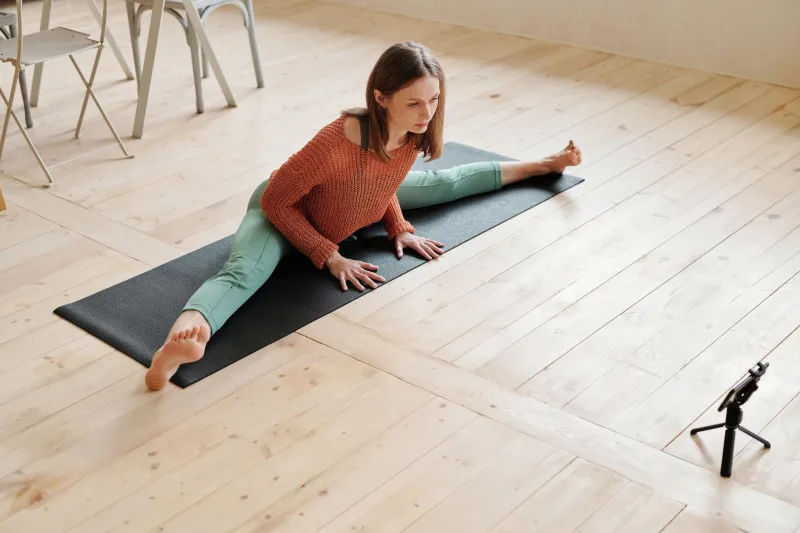
She could fold herself in half. Hamstrings like warm taffy, hips that opened without resistance, a forward fold that had people in her yoga class quietly impressed. And yet — she kept tweaking her lower back lifting groceries. Her knees ached after hiking. Getting up off the floor felt weirdly awkward.
Flexibility on paper. Dysfunction in practice.
This is more common than most people realize, and it points to one of the most persistent misunderstandings in the fitness world: that range of motion and functional movement are the same thing. They're not. Not even close.
The Difference Nobody Talks About
Flexibility is your body's capacity to be moved into a range. Someone pulls your leg up, and your hamstring allows it. You lean forward, gravity assists, and you reach the floor. This is called passive range of motion — and while it has value, it tells you almost nothing about how well you can actually use that range.
Functional movement is something different. It's your ability to actively control your body through a range of motion under real-world conditions — with load, with speed, with coordination, without someone or something holding you there. It requires not just flexible tissue, but strength, stability, and neuromuscular coordination working together.
Here's the analogy that tends to land: imagine a door that swings open 180 degrees, but has no hinges on one side. It opens wide. It just falls off the wall while doing it.
Mobility without stability is that door.
Why Passive Flexibility Can Actually Increase Your Injury Risk
This is the part that surprises people. You'd think more flexibility would mean fewer injuries, right? But when you increase your passive range of motion without building corresponding strength and control through that range, you create what physical therapists call hypermobility with instability — joints that travel farther than your muscles can safely manage.
Your nervous system is smart. It knows when it can't protect a position. So in daily life, it quietly restricts your movement to stay within the range it trusts — which might be much smaller than your passive flexibility suggests. That disconnect is where injuries sneak in: the moments when you move quickly, catch yourself off balance, or reach in an unexpected direction and your body travels somewhere it hasn't trained to go.
This is especially common in the hips, shoulders, and lumbar spine — three areas where people tend to chase flexibility hardest and where instability does the most damage.
The Assessment You're Probably Not Doing
Most people assess their flexibility by how far they can stretch. But that's only half the picture. The more revealing test is whether you can actively control that same range.
Try this with your hips. Lie on your back and lift one leg straight up toward the ceiling, using only your own muscle effort — no hands, no straps. How high can you get it before your lower back starts to compensate or the other leg shifts? That ceiling is your active range of motion. Compare it to how high your leg goes when someone else lifts it for you. The gap between those two numbers is the gap between your flexibility and your functional strength.
A small gap is normal and healthy. A large gap — especially in key movement areas like hip flexion, shoulder elevation, or ankle dorsiflexion — suggests you've been building passive range without the active control to back it up.
What "Functional" Actually Means in Real Life
Functional movement isn't a gym concept. It's a life concept. It's the ability to:
- Pick something up off the floor without bracing yourself for impact
- Reach overhead without your shoulder creeping toward your ear
- Step off a curb on uneven pavement without a second thought
- Sit cross-legged on the floor at a kid's birthday party and get back up without making a sound effect
None of these require elite athleticism. They require your joints to move through everyday ranges with control, coordination, and zero drama. And that's precisely what passive flexibility training — done in isolation — doesn't prepare you for.
Bridging the Gap: What to Actually Train
The fix isn't to abandon your flexibility work. It's to make it active.
End-range strengthening. Instead of just stretching into a position and holding it, practice generating force from that position. If you're working on hip flexor flexibility, follow your stretch with active leg lowering or slow hip flexion holds. You're teaching your body to own the range, not just visit it.
Controlled articular rotations (CARs). This technique, popularized in functional range conditioning circles, involves taking a joint through its full range of motion under your own muscular control — slowly, deliberately, with maximum tension throughout. It's not glamorous, but it's one of the most effective tools for building usable mobility.
Load the positions you're stretching into. Bulgarian split squats build hip mobility and strength simultaneously. Overhead pressing with proper scapular control does the same for shoulders. If a position matters for your life, it should eventually be trained with some form of resistance, not just held passively.
Context-specific movement practice. Think about the movements your actual life demands. If you coach youth soccer on weekends, lateral cutting matters. If you're a nurse on your feet for 12-hour shifts, single-leg stability and hip endurance matter. Your mobility training should be preparing you for those movements, not just improving a measurement on a flexibility test.
The Question Worth Asking
Next time you finish a stretching session, ask yourself: did I just increase my range, or did I actually improve how my body moves?
The answer should shape what you do next. Flexibility that doesn't translate to your daily life — to how you carry your kids, climb stairs, recover from a stumble, or show up on a weekend hike — is an incomplete investment. It's a starting point, not a destination.
Real functional movement means your body can go where life takes it, handle what it throws at you, and do it with control. That's the goal. Not the number on a sit-and-reach test.
Mobility is the door. Stability and strength are the hinges. You need both before any of it actually works.