Eight Hours at a Desk Is Quietly Wrecking the Workout You Did This Morning

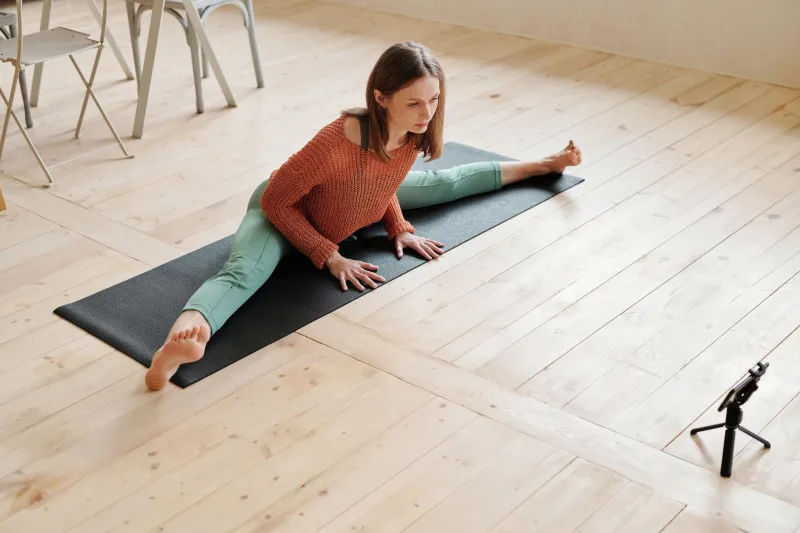
Photo by Photo by Divaris Shirichena on Unsplash on Unsplash
You set your alarm for 5:30 AM. You showed up. You put in a solid hour of squats, rows, and whatever the trainer programmed for a Tuesday. You felt strong. You felt accomplished. And then you drove to the office, sat down, and didn't really move again until lunch — which you also ate sitting down.
Here's the part nobody talks about enough: fitness isn't just about what happens during your workout. It's about what your body does with the other 23 hours in the day. And right now, for most Americans, those other hours look a whole lot like a chair.
The Biomechanics of Sitting (And Why Your Body Hates It Long-Term)
Sitting isn't inherently evil. Your body can handle it. What it can't handle — at least not without consequences — is sitting for six, eight, or ten consecutive hours while also expecting to perform well during a 60-minute training window.
When you sit for extended periods, a few things start happening under the hood. Your hip flexors, particularly the psoas, shorten and tighten because they're held in a contracted position for hours. Your glutes essentially go on vacation — a phenomenon some coaches call "gluteal amnesia," and yes, it's as frustrating as it sounds. Your thoracic spine stiffens into flexion, your neck juts forward to compensate, and your deep stabilizers quietly check out.
None of this feels dramatic while it's happening. That's the problem.
By the time you show up to the gym the next morning, your body isn't starting from a neutral baseline. It's starting from a compensated one. Your squat pattern gets distorted because your hips won't open properly. Your overhead press looks off because your t-spine can't extend the way it needs to. You're not weak — you're restricted. And there's a big difference.
Compensation Patterns You're Probably Already Living In
Compensation is your nervous system's way of getting the job done when the preferred movement pathway is blocked. It's smart, actually. But over time, compensatory patterns become the default, and that's where things get messy.
Consider what happens during a long commute. You're gripping a steering wheel with your arms internally rotated, your lower back rounding slightly into the seat, and your neck forward-flexed toward the road. Do that for 45 minutes twice a day, five days a week, and your body starts to treat that position as normal.
Now take that same person and ask them to do a Romanian deadlift with a neutral spine and active lats. Their nervous system is going to fight them every step of the way — not because they lack strength, but because their movement map has been quietly redrawn by hours of static loading in a compromised position.
Screen time adds another layer. Scrolling on your phone with your head dropped forward puts roughly 40 to 60 pounds of effective load on your cervical spine, depending on the angle. Multiply that across a few hours of evening Netflix, and you've essentially been doing a sustained isometric hold in the worst possible neck position.
Movement Integrity Isn't Just a Gym Thing
This is where the concept of movement integrity becomes critical. Movement integrity means that your body's ability to move well — with proper joint mechanics, appropriate muscle recruitment, and good motor control — is consistent across all the contexts of your day, not just when you're wearing your lifting shoes.
Maintaining movement integrity through a sedentary workday takes intentional effort. But it doesn't require blowing up your schedule. It requires small, strategic interventions.
Break up your sitting every 30 to 45 minutes. Stand up. Walk to the kitchen. Do five hip hinges at your desk. The goal isn't a mini-workout — it's a pattern interrupt that tells your nervous system you still know how to use your body in more than one position.
Use transition moments. The walk from your car to your office door, the trip to the printer, the three minutes between Zoom calls — these are all opportunities to reset your posture, take a full breath, and remind your hips that extension is still an option.
Try a standing or walking meeting. This sounds like a productivity gimmick, but the movement science behind it is real. Alternating between sitting and standing keeps your postural muscles engaged and reduces the cumulative load of sustained flexion.
Do a pre-training reset, not just a warm-up. Before your next workout, spend five minutes actively reversing the positions you held all day. A few thoracic extensions over a foam roller, some hip flexor stretches, a couple of deep squats with a controlled tempo. You're not just warming up your muscles — you're essentially rebooting your movement software.
The Bigger Picture: Your Day Is Your Training Program
There's a tendency in fitness culture to treat the workout as the thing and everything else as just... life. But your body doesn't make that distinction. It's always adapting to the demands placed on it. If the dominant demand of your day is sustained static loading in a flexed, compressed position, that's what it's going to optimize for — regardless of what you did at 6 AM.
Think of your fitness not as a one-hour daily deposit but as a continuous conversation between your body and its environment. The gym is where you make intentional demands. But the rest of the day is where your body decides whether to hold onto those adaptations or quietly trade them in for whatever posture your office chair is selling.
Moving better isn't about training harder. Sometimes it's about sitting less — or at least sitting smarter. Your workout earned you something this morning. Don't let the afternoon take it back.