The Workout Your Feed Loves Is the One Your Nervous System Is Begging You to Stop

The Highlight Reel Has a Hidden Cost
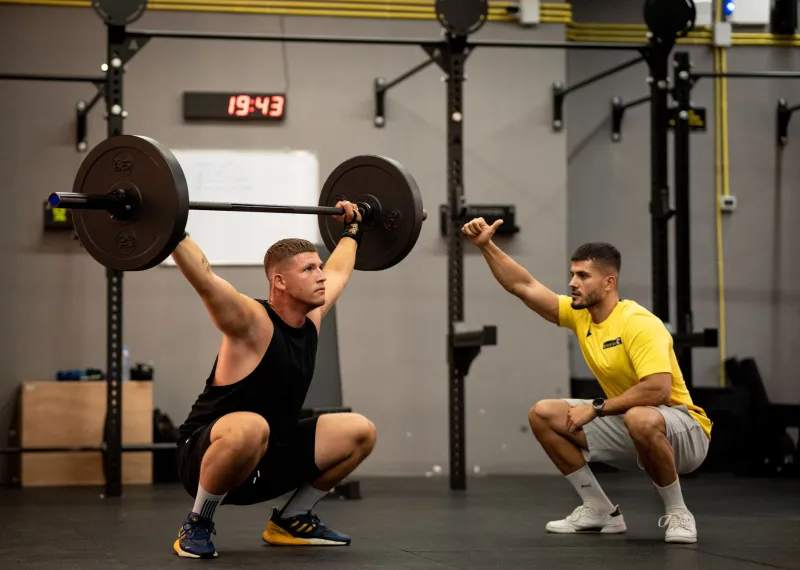
Scroll through any fitness account for about thirty seconds and you'll see a pattern. Box jumps. Barbell snatches. HIIT circuits moving at a pace that looks almost cinematic. Everything is fast, loud, and visually electric. It's designed to stop your thumb mid-scroll — and it works.
But here's the thing nobody's captioning beneath those slow-motion clips: your nervous system doesn't care how good the footage looks. It's not watching the same video you are. It's reading the internal data — heart rate variability, cortisol levels, muscle tension, breathing patterns — and it's forming a very different opinion about what's happening to your body.
For a lot of people, that opinion is something along the lines of this is too much, too often, and not what we actually need right now.
Two Systems, One Body — And Only One Gets Airtime
Your autonomic nervous system runs two main modes. The sympathetic system is your accelerator — it drives fight-or-flight responses, ramps up your heart rate, floods your body with adrenaline, and prepares you for intense physical output. The parasympathetic system is your brake — it governs rest, digestion, recovery, and the kind of calm that lets your body actually repair itself between sessions.
Modern fitness culture has basically built a religion around the accelerator.
High-intensity interval training, max-effort lifting, explosive plyometrics — these aren't inherently bad. They have real benefits, and there's legitimate science behind them. The problem is the ratio. When every session is a sympathetic spike, when rest days feel like failure, and when the only workouts that feel valid are the ones that leave you gasping, you're not building resilience. You're just accumulating stress on top of stress.
And your body keeps the tab.
What Chronic Sympathetic Activation Actually Feels Like
You might not connect the dots at first, because the symptoms don't always show up at the gym. They show up everywhere else.
You sleep eight hours and still feel wrecked by noon. Your resting heart rate creeps up over weeks. You get irritable faster than you used to. Recovery between sessions takes longer even though you're doing everything the same. Motivation that used to feel automatic starts to feel like a chore you're grinding through.
This is what a nervous system running hot for too long actually looks like. It's not dramatic. It doesn't announce itself with a single injury or a clear breaking point. It's a slow erosion — the kind that's easy to blame on stress at work, poor sleep hygiene, or just getting older.
But a significant piece of it might be the training itself.
The Instagram Metrics That Mean Nothing to Your Body
Fitness content is built around things that photograph well and generate engagement. Max weight on the bar. Calories burned per session. How many days in a row you showed up. These metrics create a compelling narrative of progress, and they're not meaningless — but they're deeply incomplete.
The metrics your nervous system actually cares about don't make great content. Heart rate variability trends over six weeks. How quickly your breathing returns to baseline after exertion. Whether you feel genuinely restored after a recovery session or just less tired. The quality of your sleep in the 48 hours following a heavy training day.
None of that fits in a caption. But all of it tells you more about your actual health trajectory than any PR you've ever hit.
Training for Regulation, Not Just Performance
Shifting the way you think about your workouts doesn't mean going soft or abandoning intensity forever. It means being intentional about when you push and when you pull back — and understanding that the pull-back sessions are doing real work, even when they don't feel impressive.
Parasympathetic-supportive training looks like this in practice:
Zone 2 cardio — steady-state movement where you can hold a conversation, sustained for 30 to 60 minutes. This is one of the most underrated tools in long-term fitness, and it's almost impossible to make look exciting on camera.
Controlled breathwork during movement — slowing your exhale during resistance training, using nasal breathing during moderate cardio, and paying attention to breath patterns rather than just rep counts.
Mobility and slow flow work — not as a warm-up afterthought, but as a primary session. Yoga, tai chi, deliberate joint mobility sequences — these activate the parasympathetic system and build the kind of body awareness that high-intensity work can actually suppress over time.
Cold-to-warm contrast or intentional cool-downs — ending sessions with a genuine 10-minute wind-down rather than stopping abruptly and immediately checking your phone. The transition out of effort matters more than most people realize.
Recognizing When You're Training for an Audience
This is the honest question worth sitting with: who are you actually training for?
If your rest days feel like something to apologize for, that's a sign. If you feel guilty doing a walk when your body is clearly asking for one, that's a sign. If the workouts that make you feel genuinely good afterward are the ones you'd never post because they don't look like enough — that's maybe the biggest sign of all.
The fitness industry has done an extraordinary job of making intensity feel like virtue and recovery feel like weakness. But that's a marketing framework, not a physiological one. Your body doesn't assign moral value to your training choices. It just responds to them.
And right now, a lot of bodies are responding to years of sympathetic overdrive by quietly shutting things down.
Moving Beyond the Feed
The brand name on this site isn't accidental. Beyond your motion means something specific — it means there's more happening in your body than what's visible from the outside, more to health than what's measurable in a session, and more to progress than what makes a compelling workout video.
Your nervous system is one of the most sophisticated regulatory systems in existence. It adapts, compensates, and signals constantly. The goal of smart training isn't to override those signals with more intensity — it's to learn how to read them and respond in ways that actually build a body that functions well for decades, not just looks capable in a thumbnail.
That might mean your next great workout is a 45-minute walk with no music, paying attention to your breathing. It might mean a full session of slow, deliberate mobility work that you don't document at all.
It might be the best thing you've done for your health in months — and nobody has to know about it but you.