Your Form Looks Flawless on Camera — But Your Joints Are Telling a Completely Different Story
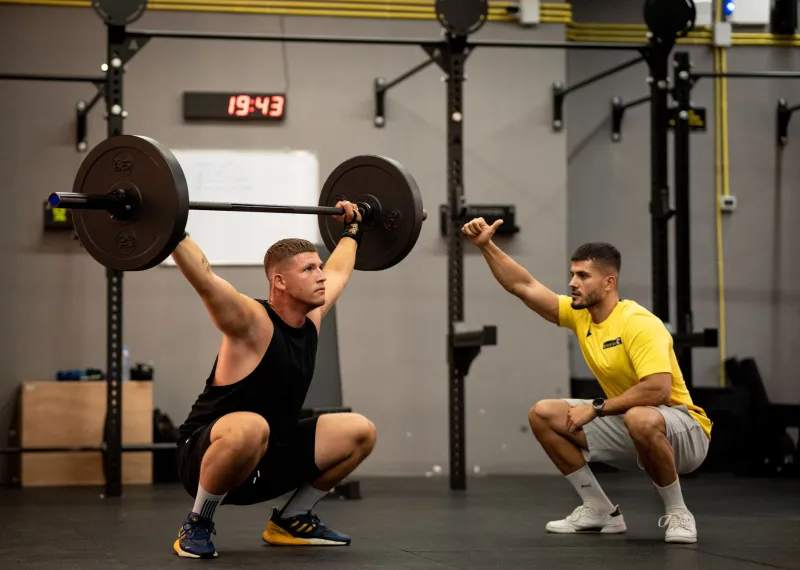
There's a version of your squat that looks incredible. Chest up, knees tracking, bar path clean. You've got the clip saved. Maybe you've even posted it. The comments say "perfect form" and honestly? It kind of is — at least from the outside.
But here's the thing nobody's commenting on: how your left hip quietly shifts at the bottom. The way your right knee drifts just a half-inch inward on the way up. The subtle breath-hold that tells your nervous system you're not as stable as you think you are. None of that shows up in the video. None of it gets flagged in the replies.
And none of it stops the slow accumulation of wear that eventually becomes the injury you "never saw coming."
The Gap Between Looking Right and Moving Right
Fitness culture in the US has gone heavily visual — and for good reason. Video feedback is genuinely useful. Watching yourself move can catch obvious errors that feel invisible in the moment. Coaches use it. Physical therapists use it. It has real value.
But somewhere along the way, looking right became the goal instead of moving right. And those two things are not the same.
Biomechanics — the actual mechanics of how your joints, muscles, and connective tissue interact under load — doesn't care about camera angles. A movement can look smooth on a phone screen while quietly creating shear forces at the knee, excessive anterior pelvic tilt under load, or asymmetrical hip loading that your body compensates for by borrowing stability from somewhere it shouldn't.
The camera captures the surface. Your joints are living through the interior.
What Compensation Patterns Actually Feel Like (Before They Hurt)
Here's where it gets tricky: compensation patterns don't usually hurt at first. That's kind of the whole point — your body is resourceful. When one system is limited, it borrows from another. When your hip flexors are tight and your glutes aren't firing properly, your lower back picks up the slack. When your thoracic spine is stiff, your shoulder complex overworks to create the range you need.
For a while, this works. You get through the set. The numbers go up. The video looks fine.
But compensation has a credit limit. The structures doing the extra work weren't designed for that load, and they'll eventually tell you so — usually in the form of a nagging ache that seems unrelated to anything you did, or an acute injury that feels like it came out of nowhere.
Some early signs that compensation is already in play:
- One side feels "tighter" or "weaker" than the other during a movement you've done for years
- You naturally adjust your stance or grip without knowing why
- A movement feels harder on certain days without an obvious reason
- You notice fatigue in a muscle that shouldn't be primary for that exercise
None of these show up on video. They show up in your body — if you're paying attention.
Proprioception: The Sense You're Probably Neglecting
Proprioception is your body's internal GPS — the system of receptors in your muscles, joints, and connective tissue that tells your brain where you are in space and how much force is being applied. It's the reason you can walk in the dark without falling, and it's the reason an experienced athlete can feel when a rep goes wrong even before it looks wrong.
Most people train their muscles. Very few people deliberately train their proprioceptive system.
When proprioception is sharp, you catch the drift before it becomes a pattern. You feel the knee start to cave and self-correct. You sense the hip shift and adjust. You're essentially running internal quality control in real time.
When proprioception is underdeveloped — which is common, especially in people who train primarily on stable surfaces with predictable loads — you lose that internal feedback loop. You become dependent on external cues: the mirror, the video, the coach yelling from across the gym. And when those cues aren't available, or when they're only capturing what's visible, the gaps go unnoticed.
How to Start Training From the Inside Out
This isn't an argument against video feedback or coaching cues. Use them. They're helpful. But they work best when they're reinforcing what you're already starting to feel internally, not replacing the internal signal entirely.
A few ways to start rebuilding that internal awareness:
Slow it down deliberately. Not just to "control the eccentric" — but to actually feel each phase of a movement. Where is the load? Which structures are working? Is anything gripping or bracing that doesn't need to be?
Close your eyes during low-stakes movement. Balance drills, bodyweight squats, single-leg work — doing these without visual input forces your proprioceptive system to do more of the work. It's uncomfortable at first. That discomfort is information.
Do a post-set body scan. After a working set, before you rack the weight and move on, take five seconds. What feels fatigued? What feels compressed? Is there anything that feels off that didn't feel off at the start? You're training attention as much as tissue.
Work with a movement-focused professional. A physical therapist or qualified movement coach — someone who understands functional biomechanics, not just aesthetics — can identify compensation patterns that neither you nor your camera can see. Getting an assessment isn't just for people who are injured. It's for people who want to stay that way.
The Reel Isn't the Review
There's nothing wrong with being proud of a good-looking rep. Progress deserves to be celebrated, and there's real motivation in seeing yourself move with intention and load.
But the reel isn't the review. The video is a highlight. Your joints are keeping the full record.
The goal of training — real training, the kind that builds a body that works well for decades — isn't to look functional on a screen. It's to actually be functional in the full, three-dimensional, internally-felt sense of the word. That requires more than a good camera angle. It requires you to stop outsourcing your awareness and start developing it.
Because eventually, the joints stop screaming quietly. And by the time they get loud, the video evidence won't matter much at all.