The Shoes You Trust Most Might Be the Ones Holding You Back
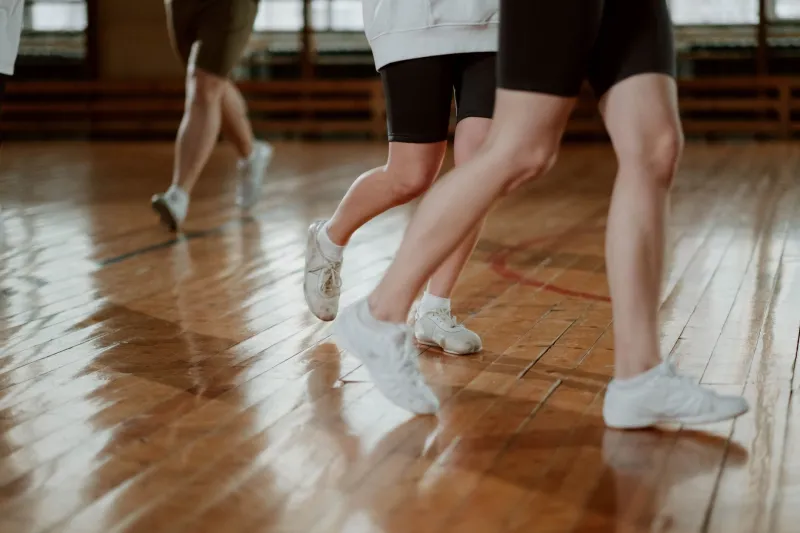
Let's talk about something that's been sitting right under your feet this whole time.
You spent real money on those athletic shoes. Maybe a running specialty store did a gait analysis, watched you jog on a treadmill for thirty seconds, and handed you a pair with maximum cushioning and built-in arch support. They feel incredible. Plush, stable, forgiving. And that's exactly the problem.
Comfort and function are not the same thing. And in the case of modern athletic footwear, they're sometimes working directly against each other.
What Your Feet Are Actually Supposed to Do
Your foot is not a passive platform. It's a complex sensory organ — 26 bones, 33 joints, over 100 muscles, tendons, and ligaments — all designed to gather information from the ground and feed it back to your brain in real time. That feedback loop is called proprioception, and it's one of the most critical inputs your nervous system uses to coordinate movement.
Every time your bare foot hits the ground, thousands of sensory receptors in the skin and connective tissue fire off data: How hard is the surface? Is it uneven? How fast am I moving? Where is my center of mass? Your brain processes all of it, almost instantly, and adjusts your movement accordingly.
Now wrap that foot in an inch and a half of foam and a rigid plastic support structure. Suddenly, the ground feels the same whether you're on asphalt, grass, or gravel. The sensory input is muffled. Your brain gets less information. And over time, it starts making decisions based on incomplete data.
The Cushioning Trap
Here's something counterintuitive: research has consistently shown that highly cushioned running shoes don't reduce injury rates the way we'd expect them to. In some cases, runners in maximally cushioned footwear actually land with more impact force than those in minimal shoes.
Why? Because your body is smarter than your shoes. When sensory feedback is dampened, your nervous system compensates by changing how you land. Without the natural signal of ground contact, runners tend to heel-strike harder — essentially crashing into the ground with each step instead of absorbing force gradually through the foot and ankle.
Your body was designed to self-regulate. Take away the feedback it needs to do that, and it improvises. Usually not in your favor.
What Happens to Your Ankles (and Everything Above Them)
Motion-control shoes and thick midsoles don't just affect how your foot hits the ground — they change what your ankle, knee, hip, and lower back have to do with every single step.
The ankle is supposed to be a dynamic, responsive joint. It pronates and supinates naturally as part of a healthy gait cycle, absorbing shock and transferring force efficiently up the kinetic chain. When a shoe is engineered to restrict that motion — to prevent "overpronation" — the ankle stops doing its job. The muscles around it don't have to work as hard. And like any muscle you stop using, they get weaker.
Over time, that weakness doesn't stay at the ankle. It migrates. Knees start compensating. Hips shift to pick up the slack. The lower back takes on load it was never meant to handle. What started as a "supportive" shoe choice becomes a slow-moving upstream problem.
Elevated Heels: A Subtle Shift with Big Consequences
Most athletic shoes — not just dress shoes or heels — have a noticeable heel-to-toe drop. Even running shoes marketed as performance footwear often have a 10–12mm difference in height between the heel and forefoot. That might not sound like much, but it effectively pitches your entire body forward.
Your calves and Achilles tendon adapt to that shortened position. Your pelvis tilts. Your lumbar spine changes its curve. You start standing and moving in a posture that's subtly off from what your skeleton was designed for. Do that for eight hours a day, every day, for years — and you've essentially been training your body into a compensated position without ever stepping foot in a gym.
There's a reason physical therapists see so many clients with chronically tight calves, plantar fasciitis, and anterior knee pain who have never had a traumatic injury. The shoes did it slowly.
So What Should You Actually Wear?
This isn't a manifesto for going barefoot at the grocery store. Context matters, and there's a spectrum here worth understanding.
Minimalist and zero-drop footwear — brands like Altra, Vivobarefoot, and Xero Shoes — are designed to let your foot move and sense the ground more naturally. They tend to have thin, flexible soles and little to no heel elevation. For people who've spent decades in traditional footwear, transitioning to these too quickly can cause issues (hello, Achilles tendinopathy). Go slow.
Wide toe box shoes matter more than most people realize. When your toes are crammed into a tapered front, they can't splay naturally on impact — which is a key part of how the foot distributes load. A wider toe box lets the foot do what it's built to do.
Barefoot training at home is one of the easiest ways to start rebuilding foot strength and sensory awareness without overhauling your entire shoe wardrobe. Walking around without shoes on varied surfaces — carpet, hardwood, grass outside — wakes up receptors that have been asleep for years.
Foot strengthening exercises are non-negotiable if you're serious about this. Toe spreads, short foot exercises, single-leg balance work on unstable surfaces, calf raises through full range of motion — these rebuild the foundation that your shoes have been substituting for.
The Bigger Picture
Footwear is just one piece of the movement puzzle, but it's a foundational one — literally. The way your foot interacts with the ground influences everything that happens above it. Your gait, your posture, your joint health, your athletic performance. When the foundation is giving your body bad information, every movement built on top of it is working with a handicap.
Beyond Your Motion is all about moving smarter, not just harder. And sometimes moving smarter starts with questioning the gear you assumed was helping you the most.
Your shoes might feel like support. But real support means your body learns to support itself. Start paying attention to what's happening from the ground up — you might be surprised how much has been happening right under your feet.