Stretching Further Isn't Making You More Athletic — It Might Be Making You Fragile
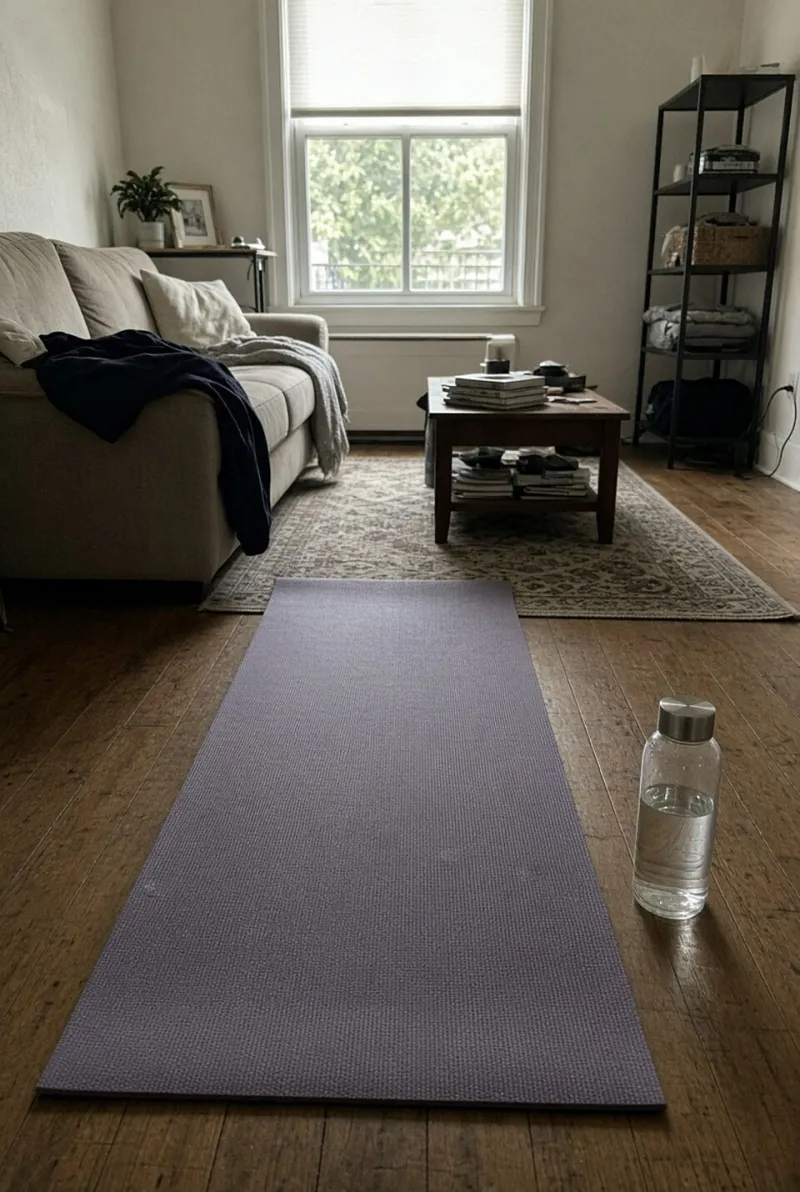
Photo: Femivaco, CC BY 4.0, via Wikimedia Commons
Flexibility has a serious PR team. Yoga studios are packed. Stretching reels dominate wellness feeds. Everyone wants to touch their toes, sink into a deep squat, or fold themselves in half during a morning routine. And on the surface, that looks like progress.
But here's the thing nobody's talking about loudly enough: getting more flexible without getting stronger in that new range is one of the sneakiest ways to set your body up for injury. More range of motion isn't inherently a win. It's only a win if your neuromuscular system can actually do something useful with it.
What Flexibility Actually Means (And What It Doesn't)
When most people say they want to be more flexible, what they really mean is they want their muscles to stop feeling tight. That's fair. Tightness is uncomfortable, and it can limit how you move through daily life.
But flexibility — the passive ability to move a joint through a range — is only one half of a two-part equation. The other half is mobility, which is the active, controlled ability to move through that range with strength and stability.
Think of it this way: a wet noodle is extremely flexible. It's also completely useless for anything that requires structure.
When you stretch aggressively without pairing it with strengthening work, you can increase the range your joints can passively reach. But if your muscles haven't been trained to generate force and maintain control in those new positions, you've essentially created real estate your body can't protect.
The Hypermobility Problem Nobody Warned You About
You've probably seen it — someone who can fold forward and press their palms flat to the floor, or drop into a split like it's nothing. Impressive, right? Maybe. But that same person might complain of chronic lower back pain, unstable knees, or recurring shoulder issues.
Hypermobility — having joints that move beyond their typical range — is more common than people realize, and it's not always a genetic condition. You can acquire excessive laxity over time through years of aggressive stretching without corresponding strength work. Ligaments and joint capsules don't have great blood supply, which means once they've been stretched out, they don't snap back the way muscles do.
The result? Joints that have more room to move but less structural support to keep them safe. In real-world movement, that's a liability.
Why Your Nervous System Is the Missing Piece
Here's where it gets genuinely fascinating. Your body doesn't just move mechanically — it moves neurologically. Your nervous system is constantly mapping what positions are safe, what ranges it can generate force in, and what territories feel unknown and threatening.
When you passively stretch into a new range without actively training there, your nervous system essentially flags that position as uncharted. It hasn't built the motor patterns or the muscular output needed to operate confidently in that zone. So what happens when you end up there under load — lifting, catching yourself from a fall, or playing recreational sports? Your body doesn't have a plan. That's when things go wrong.
This is why physical therapists and movement coaches increasingly talk about end-range strength — the ability to control your joints at the very edge of their range. It's not just about getting there. It's about being able to do something useful once you arrive.
What a Flexibility-Heavy Routine Actually Looks Like in Practice
Let's say you've been doing yoga three times a week for the past year. Your hamstrings have loosened up considerably. Your hip flexors feel less like steel cables. You can get into positions that used to be completely out of reach.
But during a weekend hike, your knee buckles slightly on a downhill section. Or you reach awkwardly to grab something off a shelf and your shoulder catches. Or you try a new sport and something in your lower back twinges in a way it never did before.
This isn't bad luck. This is what happens when your passive range outpaces your active control. The hike demanded your hip and knee stabilizers to fire in a range you'd stretched into but never loaded. The shoulder reach put your rotator cuff in an end-range position it had no strength training in. Your back got caught in a rotation your deep stabilizers weren't prepared for.
The flexibility was there. The neuromuscular foundation wasn't.
How to Actually Build Useful Range of Motion
None of this means stop stretching. Flexibility work has real value — for recovery, for circulation, for stress management, and yes, for reducing the kind of passive stiffness that makes daily movement uncomfortable. The problem isn't the stretching. It's what's missing alongside it.
Here's what a smarter approach looks like:
Load your new ranges. After you stretch into a position, train there. Hip flexor stretch? Follow it with a loaded split squat that takes you into that same depth. Hamstring flexibility work? Add Romanian deadlifts that challenge your hamstrings through their full length under load.
Use active mobility drills, not just passive holds. Instead of sitting in a stretch, try moving in and out of it with control. Leg swings, controlled articular rotations (CARs), and dynamic warm-up patterns teach your nervous system that these ranges are safe territories.
Build stability at end range. Exercises like deep squat holds with controlled breathing, 90/90 hip switches with active transitions, and overhead carries train your body to be strong and organized at the edges of its range — not just in the middle.
Don't outpace your strength. If your flexibility is advancing faster than your ability to control those positions, slow down the stretching and catch your strength work up. Balance is the actual goal.
The Real Benchmark for Movement Health
At Beyond Your Motion, we talk a lot about moving better — not just moving more, and not just moving farther. A body that can squat deeply, reach overhead, and rotate through its hips is genuinely capable. But only if it can do those things under load, under fatigue, and in unpredictable real-world situations.
The benchmark isn't how far you can stretch on a mat. It's whether your body can own that range when life demands it unexpectedly.
Flexibility is a tool. Strength is the foundation. You need both — and you need them working together. The next time you roll out your yoga mat or settle into a long static stretch, ask yourself: am I building range I can actually use? Or am I just creating space my body doesn't know how to protect?
That question alone might change everything about how you train.