You're Training Hard — But Is Your Body Actually Absorbing Any of It?
Let's say you crushed a workout this morning. Heart rate was up, you hit your numbers, maybe even added a little weight to the bar. You walked out feeling like you earned something. And you did — sort of.
Here's the part most fitness content skips over: the workout itself isn't where the magic happens. The adaptation — the actual getting stronger, faster, more mobile — that all happens afterward. And if your nervous system never gets the memo that the hard part is over, your body can't do the work it needs to do between sessions.
This isn't about being soft or skipping the grind. It's about understanding that your nervous system runs the whole operation, and if you're constantly leaving it stuck on high alert, you're essentially driving with the parking brake on.
Your Nervous System Has Two Modes — and You're Probably Living in the Wrong One
Your autonomic nervous system operates in two broad states. The sympathetic side — fight-or-flight — is your gas pedal. It mobilizes energy, sharpens focus, raises your heart rate, and prepares you to handle stress. This is what powers you through a tough training session. It's a feature, not a bug.
The parasympathetic side — rest-and-digest — is your recovery mode. This is where tissue repair happens, where your muscles actually rebuild, where your heart rate variability improves, and where your brain consolidates the movement patterns you worked on. It's the environment your body needs to absorb the stimulus you threw at it.
The problem? A lot of people are spending the majority of their day — and night — stuck in sympathetic overdrive. Work stress, poor sleep, high caffeine intake, back-to-back obligations, doomscrolling at midnight — all of it keeps that gas pedal pressed down. Add a hard workout on top of an already-stressed nervous system, and you're not building a stronger body. You're just piling on more load without ever letting the structure settle.
Why You Feel Like You're Working Hard but Going Nowhere
If you've ever felt like you're training consistently but your body never quite feels recovered — always a little sore, a little flat, a little off — this is probably the missing piece.
When your sympathetic nervous system stays dominant after training, cortisol stays elevated longer than it should. Inflammation doesn't resolve as efficiently. Sleep quality suffers even when you're logging enough hours. Muscle protein synthesis — the process that actually builds the tissue you're working so hard to develop — gets suppressed.
You're essentially asking your body to renovate the kitchen while the fire alarm is still going off. It's not going to happen.
The frustrating part is that most people respond to this plateau by training harder. More volume, more intensity, more sessions per week. And that just digs the hole deeper.
What Parasympathetic Activation Actually Looks Like
You don't need a spa day or a two-hour wind-down routine. Shifting your nervous system toward recovery can happen relatively quickly — but it does require intentional input. Here are some approaches that actually work.
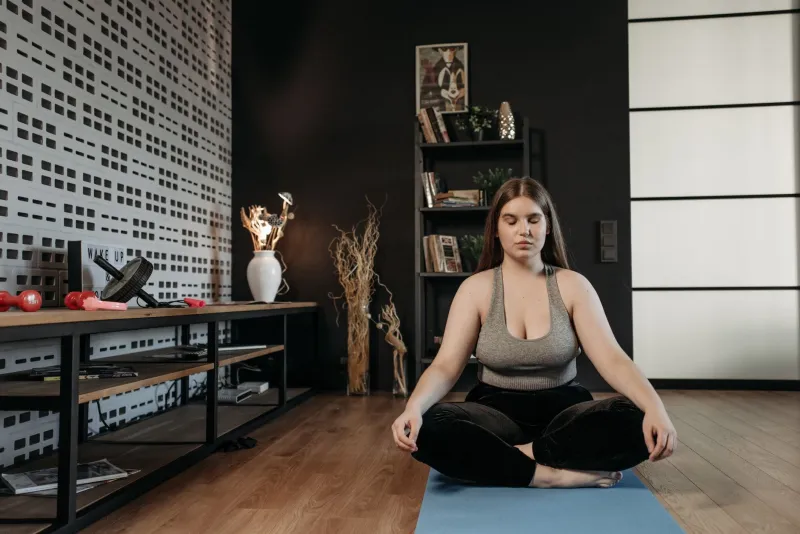
Controlled breathing after training. This is the most immediate tool you have. Extended exhales — breathing in for four counts, out for six to eight — directly stimulate the vagus nerve and signal your parasympathetic system to take over. Even five minutes of this after a workout makes a measurable difference in how fast your heart rate comes down and how quickly your body starts shifting into repair mode. Don't skip your cooldown to get to the parking lot faster.
Low-intensity movement, not stillness. Lying completely still after a hard session isn't ideal for most people. A slow 10-minute walk, some gentle mobility work, or light stretching keeps blood moving without adding load to the system. Think of it as helping your body transition, not just stopping abruptly.
Temperature contrast. Cold exposure — even a 60-second cold shower — has solid evidence behind it for parasympathetic activation and reducing post-exercise inflammation. You don't need a fancy cold plunge. A cool-to-cold shower finish works. Conversely, heat (sauna, hot bath) used strategically can also support recovery through improved circulation and nervous system downregulation.
Protecting the hour before sleep. Your nighttime sleep is the biggest parasympathetic window you have. Bright screens, intense conversations, late-night eating, and stimulants all push sympathetic activity right when your body is trying to shift gears. Dimming lights, cutting screens an hour before bed, and keeping that window calm makes your sleep dramatically more restorative — which directly feeds your training quality the next day.
Body scan and progressive relaxation. This sounds woo-woo until you understand the physiology. Deliberately releasing tension from muscle groups — starting at your feet, working upward — activates mechanoreceptors that communicate safety to your brain. It's a direct input into your nervous system's threat-assessment process. Five to ten minutes before sleep is enough to matter.
The Mindset Shift That Changes Everything
In American fitness culture, there's a deeply embedded idea that more effort always equals more results. Grinding harder, recovering faster, getting back in the gym sooner — these are treated as virtues. And to a point, they are.
But recovery isn't the opposite of training. It's the other half of it. The workout is the question your body asks. Recovery is where it figures out the answer.
When you treat post-workout practices — the breathing, the intentional cooldown, the sleep hygiene — as optional extras, you're essentially spending money on groceries and then never eating the food. The investment doesn't pay off if you skip the part where the body actually uses what you gave it.
Beyond your motion — beyond the reps and the miles and the PRs — is the biological machinery that decides whether any of it sticks. That machinery runs on signals. And right now, a lot of people are sending the wrong ones.
Start Small, but Start Now
You don't need to overhaul your entire routine. Pick one entry point this week.
Maybe it's five minutes of slow breathing at the end of every workout before you leave the gym. Maybe it's a 10-minute walk outside after dinner instead of going straight to the couch and your phone. Maybe it's committing to a consistent bedtime for seven days and seeing how your body responds.
The nervous system responds to patterns. Small, consistent signals accumulate. And once your body starts trusting that recovery time is real — that the stress has an actual end — it starts doing the work you've been training it to do all along.
You put in the effort. Now let your body catch up.