Your Legs Are Getting Stronger — But Your Body Is Learning to Move Worse
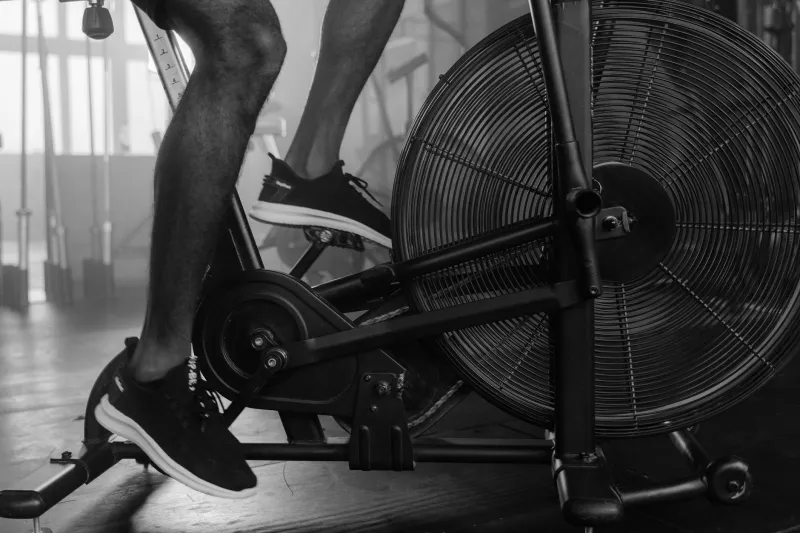
There's a particular kind of confidence that comes from a solid machine workout. You finish a thirty-minute session on the stair climber, knock out a few sets on the leg press, and walk out of the gym feeling genuinely powerful. Your legs are pumped. You're sweating. The numbers checked out.
So why does your lower back still ache when you carry groceries? Why do your knees feel stiff when you take actual stairs — you know, real ones — at the office or the subway? Why, after months of consistent training, does your body still move like it hasn't quite figured itself out?
Here's the uncomfortable truth most gym marketing won't tell you: feeling stronger and moving better are not the same thing. And some of the most popular machines on the gym floor are quietly teaching your body to do one while neglecting the other.
The Machine Feels Safe — That's Kind of the Problem
Gym machines are engineered for one thing: isolating a muscle group and loading it in a controlled, predictable path. That's genuinely useful in certain contexts — post-surgery rehab, targeted hypertrophy work, or learning a movement pattern under low risk. Physical therapists use machines deliberately and strategically.
But for most people working out three to five days a week, the machine becomes a crutch without them realizing it. The stair climber, for example, locks you into a fixed range of motion. Your pelvis barely rotates. Your hip flexors rarely reach full extension. Your core doesn't have to stabilize anything because the machine is already doing that job for you. You're essentially practicing a partial movement, over and over, under load — and your nervous system is taking notes.
The leg press is even more revealing. You're lying back at an angle, pushing weight away from you in a straight line. Your glutes fire. Your quads work hard. But your spine is supported, your balance isn't challenged, and the movement pattern has almost nothing in common with a squat, a lunge, or — critically — the way your body actually needs to function when you're standing upright and moving through the world.
What Compensatory Patterns Actually Look Like
Compensatory patterns are what happen when your body finds a workaround. They develop gradually, usually without pain, and they're often invisible until something goes wrong.
Let's say you've been doing the stair climber five days a week for six months. Your hip flexors are chronically shortened from the repetitive partial-range movement. Your glutes — which should be the primary driver in hip extension — have gotten lazy because the machine doesn't demand full activation. Your lower back has quietly started picking up the slack.
Now you go hiking on a weekend trip. The terrain is uneven. Your pelvis has to rotate. Your hips need to extend fully. And suddenly your body doesn't know what to do with that demand, because it's been practicing something else entirely. That's when the nagging ache shows up. That's when the knee starts complaining. Not because you're unfit — you've been working out consistently — but because your fitness and your movement quality have been moving in opposite directions.
This is what physical therapists sometimes call the strength-dysfunction gap: the space between what a muscle can produce in an isolated environment and what it can actually coordinate in real-world movement.
The Burn Can Mask the Problem
One of the trickiest parts of machine-heavy training is that the feedback loop feels good. You feel the burn. You see the numbers. You get stronger in a measurable way. That's reinforcing — and it should be, because you are doing something. The issue is what you're not doing.
Real movement quality shows up in the gaps: the transition between exercises, the walk to your car, the way you bend down to pick something up off the floor. If your body is developing imbalances — tight hip flexors, underactive glutes, limited thoracic rotation — those gaps are where it'll surface. And because it's gradual, most people don't connect the dots until something actually breaks down.
A useful self-check: after a leg-focused machine workout, try a single-leg Romanian deadlift with no weight. Just your bodyweight. Notice if one hip dips. Notice if your lower back rounds. Notice if you have to really concentrate to keep your balance. That movement is asking your body to coordinate, stabilize, and control — all the things the machine didn't require. The gap between those two experiences tells you a lot.
How to Use Machines Without Getting Trapped by Them
None of this means you need to avoid the stair climber or the leg press entirely. It means you need to be intentional about how they fit into your bigger picture.
Treat machines as supplements, not foundations. If the majority of your lower-body training happens on machines, you're building strength in a vacuum. Prioritize compound, multi-joint, free-standing movements — squats, deadlifts, lunges, step-ups — where your body has to do the stabilizing work itself.
Add full range of motion work deliberately. The stair climber shortens your hip flexors. Counter that with hip flexor stretches, yes, but more importantly with movements that demand full hip extension under load — like a rear-foot-elevated split squat or a kettlebell swing. Your body needs to practice the full arc of motion, not just the partial version it keeps repeating.
Pay attention to how you move between exercises. Your workout isn't just the sets and reps. How you walk, transition, and carry yourself in the gym reflects your actual movement quality. Slow down occasionally and notice.
Get a movement screen if you're serious about this. A physical therapist or a certified movement specialist can identify compensatory patterns you can't see yourself. It's not just for people who are injured — it's one of the smartest things a healthy, active person can do to stay that way.
Stronger Isn't the Goal — Capable Is
The real measure of fitness isn't how much you can push on a machine. It's how well your body handles the unpredictable, unscripted demands of actual life — a long hike, a pickup basketball game, lifting a couch, chasing a kid around a playground. Those moments don't care about your stair climber stats.
Moving better means building strength that transfers. It means training your nervous system alongside your muscles. It means occasionally choosing the harder, less comfortable exercise over the one that feels satisfying but keeps you in a narrow groove.
The gym is a tool. The stair climber is a tool. But tools are only as useful as the intention behind them. Go beyond the burn. Go beyond the number on the display. Ask your body not just to be strong — ask it to be capable of actually moving through the world the way it was built to.
That's where the real gains live.